
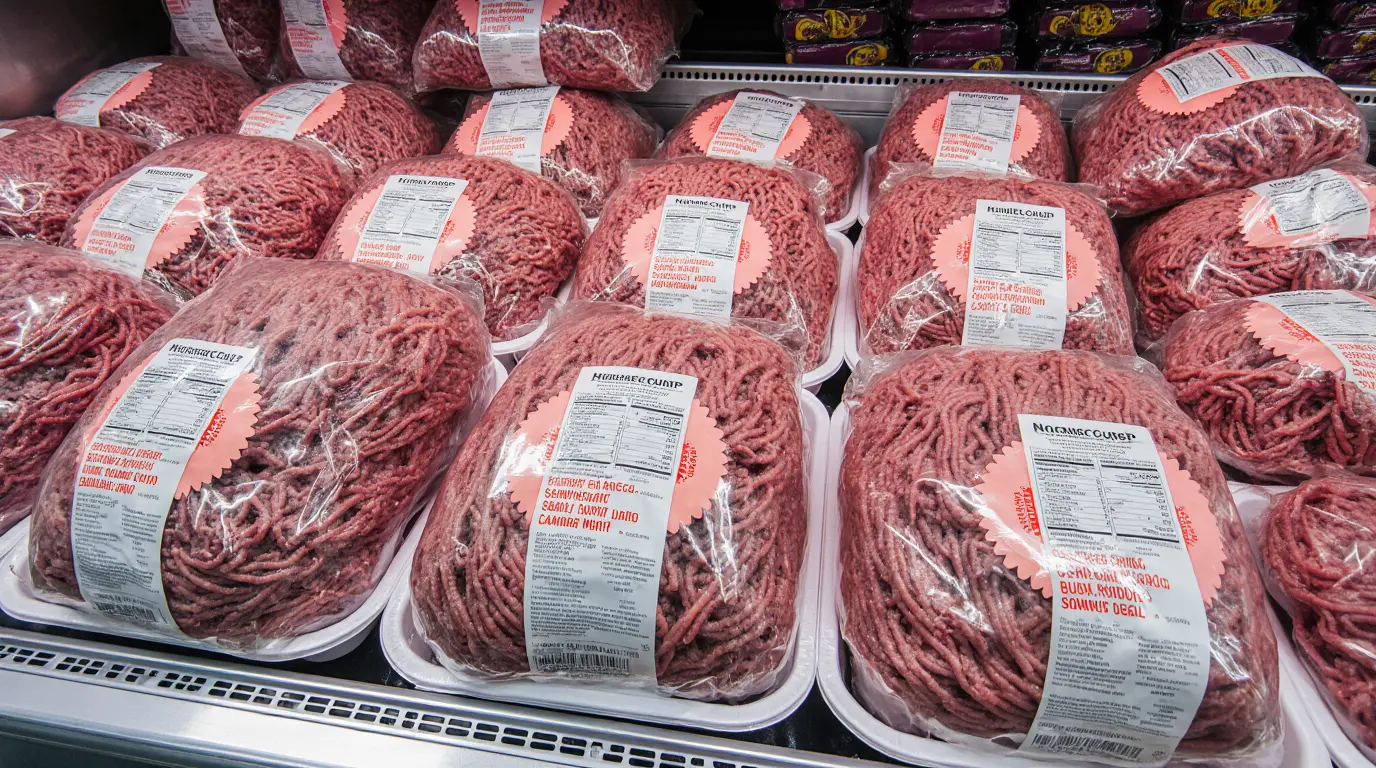
Heavier Dependence on Imports Amid Domestic Challenges
Because of widespread drought conditions and surging feed and grain costs, U.S. beef buyers have turned increasingly to imports in recent months. Brazil, after China, has become one of the most significant exporters of beef to the United States. At present, Brazil is the fifth-largest foreign supplier, but its share of U.S. beef imports has been rising steadily and now represents about 21 percent of total imports.
This year alone, imports from Brazil have doubled in the first half compared to the same period in 2024. That growth was partly fueled by uncertainty surrounding potential new tariffs, which pushed buyers to stock up before any new duties came into force.
A 50% Tariff Set to Begin in August
President Donald Trump has unveiled a plan to impose a 50 percent tariff on Brazilian beef imports starting August 1, unless the administration delays or abandons the measure. Analysts told Reuters that with this additional tariff, the overall rate on Brazilian beef would climb to approximately 76 percent for the remainder of the year.
The United States, already the second-largest importer of Brazilian beef after China, will likely feel significant market effects if these tariffs take hold.
Pressure on Ground Beef and Hamburger Meat
Experts say the new tariffs will be felt most acutely by importers of ground beef, which is commonly used in hamburger production. “U.S. beef importers will either have to pay more for Brazilian beef or look for alternative suppliers, which tend to be even more expensive,” said David Ortega, a food economist at Michigan State University, speaking to Al Jazeera.
He added that the timing could not be worse: the U.S. cattle herd is at its smallest size in decades, domestic production is under strain, and overall demand for beef remains high. Those factors already have pushed beef prices upward, and the new tariffs could amplify the trend.
Reactions from the U.S. Cattle Industry
Some U.S. trade associations have welcomed the administration’s decision. The National Cattlemen’s Beef Association (NCBA), for example, issued a statement through Kent Bacus, its Executive Director of Government Affairs:
“NCBA strongly supports President Trump holding Brazil accountable with a 50 percent tariff,” he said. The group has long criticized Brazil’s track record on animal health and food safety, citing unreported cases of atypical BSE (a neurological disease in cattle) and a history of foot-and-mouth disease.
“A 50 percent tariff is a good start,” Bacus continued, “but we need a complete suspension of Brazilian beef imports so that a thorough audit can be conducted and Brazil’s health and safety claims can be properly verified.”
According to data from OpenSecrets, nearly 95 percent of contributions from the NCBA’s political action committee in the 2024 election cycle went to Republican candidates.
Shrinking Domestic Supply and Other Trade Obstacles
The tariff announcement comes at a time when U.S. beef production is already facing multiple challenges. The domestic cattle herd is at its smallest in over 70 years, and analysts forecast a further 2 percent decline in production by year’s end.
Imports have become an important buffer. However, supply lines are also constrained elsewhere: cattle imports from Mexico have been halted due to concerns over a flesh-eating screwworm parasite. At the same time, U.S. imports from Brazil dropped in June after the White House levied a 10 percent tariff in April on all countries while trade negotiations were ongoing.
Although some U.S. producers may benefit temporarily from reduced foreign competition, Ortega noted that high input costs and weather-related issues limit how quickly domestic production can scale up.
Concerns from Restaurants and Exporters
Industry groups representing restaurants have also expressed concern. Sean Kennedy, Executive Vice President of Public Affairs at the National Restaurant Association, warned that steep tariff hikes could disrupt supply chains and force restaurants to rethink menus.
“Our industry relies on a consistent supply of imported goods that are not produced here in sufficient quantities,” Kennedy said. “Dramatic tariff increases could affect menu planning and food costs for restaurants as they attempt to find new suppliers.”
Major fast-food chains—including McDonald’s, Burger King, Wendy’s, Sonic Drive-In, and Jack in the Box—declined to comment when contacted by Al Jazeera. On the Brazilian side, JBS and Marfrig, two of the country’s largest beef processors, also did not respond to requests for comment.
Robert Perosa, president of the Brazilian Beef Exporters Association (ABIEC), said that the proposed tariff level would make it “economically unfeasible” to continue selling beef to the United States.
Market Reaction
Financial markets have so far responded calmly to the tariff news. The Dow Jones Industrial Average closed down 0.6 percent, the S&P 500 slipped 0.33 percent, and the Nasdaq Composite fell 0.2 percent.
JBS, which also operates major facilities within the United States and invested $200 million earlier this year to expand two plants, saw its stock rise 0.4 percent despite concerns over its Brazilian export business. In contrast, Marfrig’s shares fell 3.98 percent amid unrelated news of a postponed shareholder meeting tied to its planned acquisition of a poultry and pork processor.
No comment